


25 Facts for 25 Years
As we commemorate 25 years since the attacks on September 11, 2001, we honor the milestone by sharing 25 facts about the World Trade Center campus.
9/11 Memorial and Museum:
View reels here: Part I and Part II
1) The Memorial stays at a consistent temperature so that visitors can always interact with the names, no matter the weather.
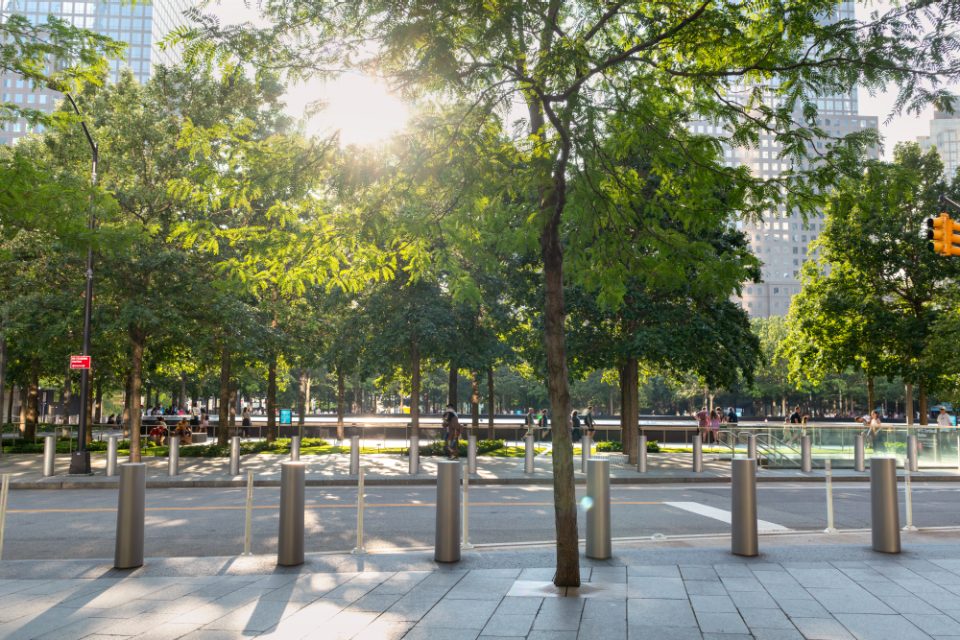
2) The trees on Memorial Plaza are Swamp White Oaks and are native to the three 9/11 crash sites: New York City; Arlington, Virginia; and Somerset County, Pennsylvania.
3) The pools themselves represent “absence made visible.” Water flows into deep pools where the Twin Towers once stood, symbolizing the lives lost and the void left behind.
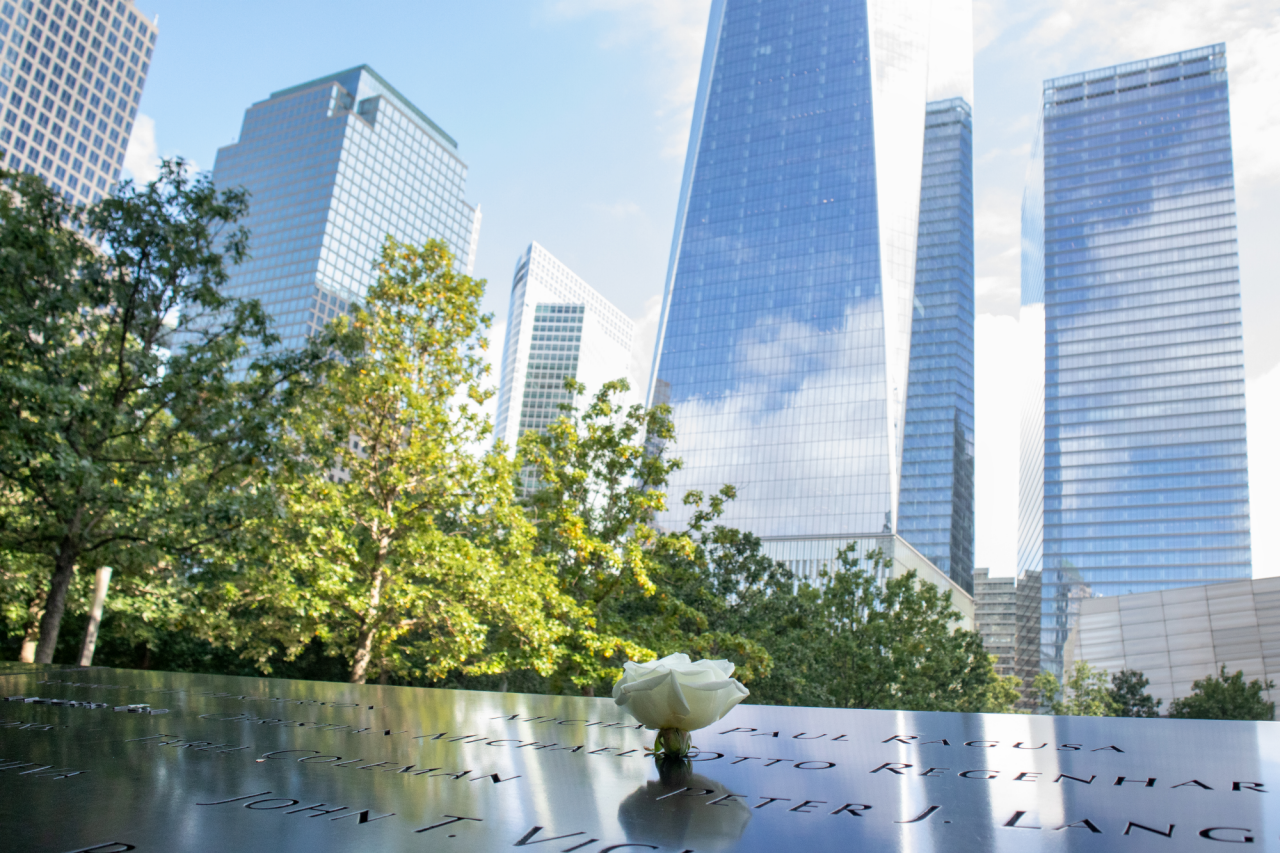
4) A white rose is placed at a victim’s name on the Memorial to remember their birthday.
5) The Survivor Tree was a severely damaged Callery Pear Tree discovered at Ground Zero. After being nursed back to health, it was brought back to campus in 2010.
6) Visitors to the 9/11 Memorial may take a free weather-resistant tag and write a message to take as a memento or leave behind around the Survivor Tree. The messages are kept as long as possible around the tree before being removed and preserved by Museum staff.
7) The names of family, friends, and colleagues were placed together around the Memorial, as they lived and died based on requested adjacencies. These requested adjacencies make it unique from any other in existence. Some requests were between relatives and friends; others were between people who had just met, but who responded together as events unfolded that day.
8) The population honored by the 9/11 Memorial Glade includes first responders and recovery workers at all three sites, relief workers and volunteers, World Trade Center survivors, and lower Manhattan residents, students, and workers, including those who cleaned buildings in the vicinity of Ground Zero. It includes a pathway flanked by six large stone monoliths, each inlaid with remnant World Trade Center steel, symbolizing strength through adversity.
9) The Memorial Pools are nearly an acre in size and sit in the footprints of the former North and South Towers. The pools contain the largest manmade waterfalls in North America, each descending 30 feet into a square basin. From there, the water in each pool drops another 20 feet and disappears into a smaller, central void.
10) The NY First Sunday program is provided by a grant from the Andrew Carnegie Foundation. The program gives New Yorkers who live, work, or study in New York on the first Sunday of each month free admission to the museum. The intention is to reconnect with the feeling of community and cohesion that blanketed our city and nation in the wake of 9/11.

St. Nicholas Greek Orthodox Church and National Shrine
View reel here.
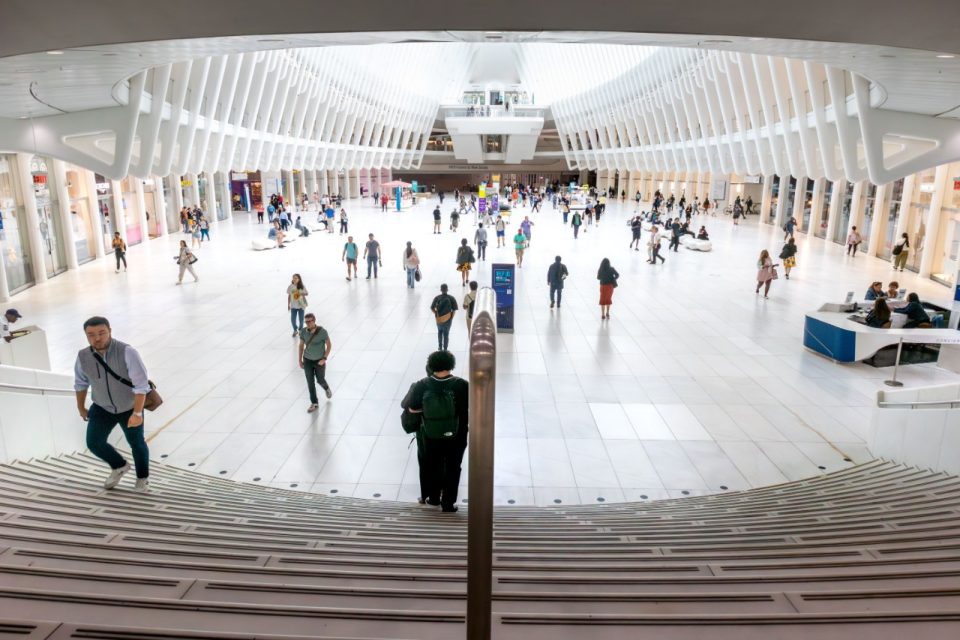
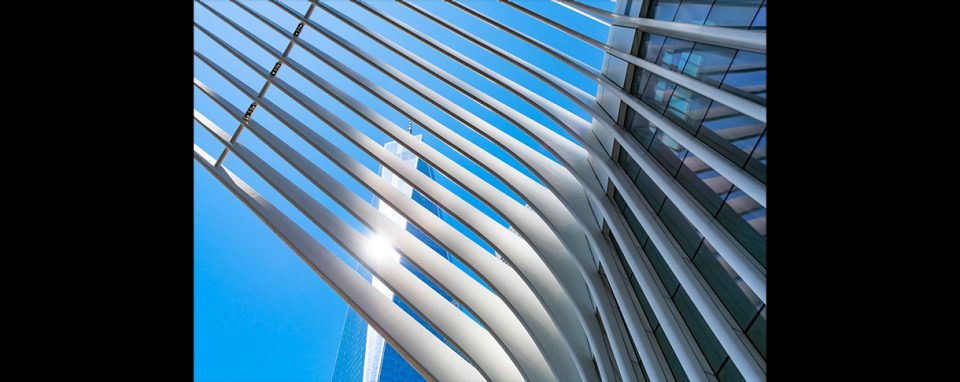
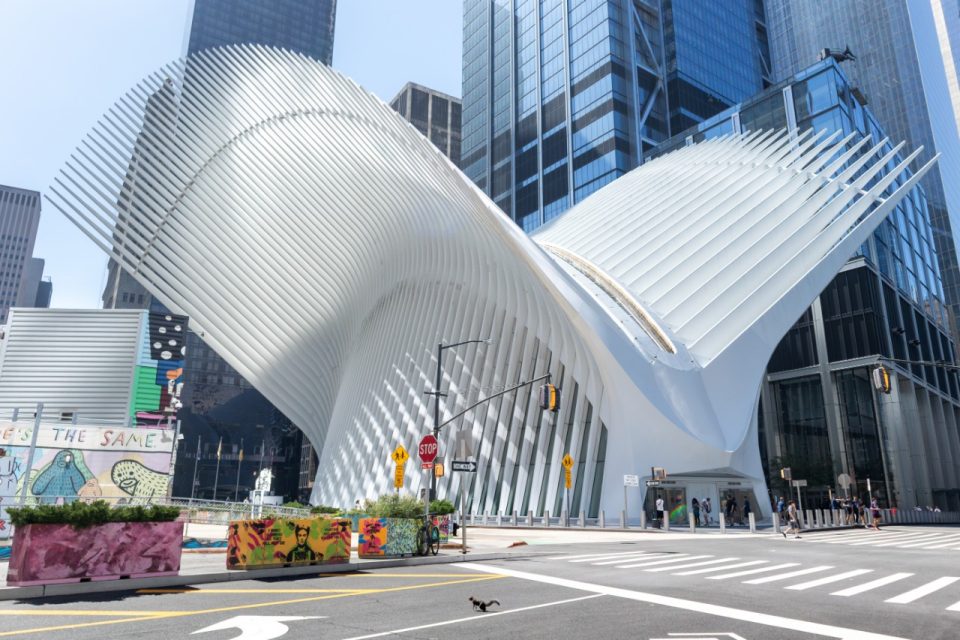
11. The newly constructed Church was designed by Oculus designer, Santiago Calatrava. He used the same marble used in the Oculus for the walls of the Church.
12. The dome of St. Nicholas Greek Orthodox Church here at the WTC was designed with 40 faceted panels, a direct nod to the 40 windows inside the Hagia Sophia dome in Istanbul. At night, the stone and glass glow from within, lighting the way for a church built to rise from tragedy into a symbol of hope.
13. Originally purchased by Greek immigrants in 1892, the Church was officially founded in 1916 where it got its start in a converted row house on Cedar Street that had once served as a tavern.
14. Despite its small footprint, the Church held its ground for decades. As development transformed the neighborhood around it, the congregation turned down repeated offers to buy the property. By 2001, the Church stood as a modest holdout, surrounded by a parking lot in the shadow of the Twin Towers.
15. On September 11, 2001, the church was destroyed in the collapse of South Tower. A decade of negotiation followed before rebuilding plans were finally confirmed in 2011. Construction on the new structure was underway by 2016, rising one block south of the Church's original Cedar Street home.

Koenig Sphere
View reel here.
16. The Koenig Sphere is a 25-foot, 25-ton metallic monument created by Fritz Koenig and was officially named Grosse Kugelkaryatide N.Y., which roughly translates to "Large Spherical Caryatid, N.Y." It was meant to be a symbol of world peace.
17. The Sphere was commissioned for the Austin J. Tobin Plaza the Port Authority of NY & NJ in 1967. The sculpture was designed to complement Minoro Yamasaki's vision of the World Trade Center and sit within a fountain in the center of the plaza.
18. The sculpture was placed in the World Trade Center plaza in 1971, two years before construction on the South Tower was complete.
19. Despite standing at the heart of the destruction on September 11, 2001, the Sphere survived largely intact, the only major artwork recovered from the wreckage without being destroyed. After the attacks, it was dismantled and stored in a hangar at JFK Airport before being reassembled and placed in Battery Park in March 2002, serving as the city's first memorial to the victims of 9/11. It remained there for over 15 years until its final move to Liberty Park in 2017, where it now overlooks the 9/11 Memorial and its original location.
20. The Koenig Sphere survived the tragedy of September 11th, but not without scars and damage from the day. It now endures as a beacon of resilience and hope, its battered surface left unrepaired by design, a lasting reminder of what was lost and what withstood.

Daniel Libeskind’s Master Plan
View reel here.
21. The center of the campus, where the 9/11 Memorial stands today, remains unbuilt by design. The space honors where the Twin Towers once stood and is a space for reflection that anchors the entire Master Plan.
22. The surrounding office towers (1/2/3/4 WTC) sit at the site's perimeter, their footprints minimized to reduce shadows and keep sunlight on the plaza below. Together, they rise in a spiral, culminating in One World Trade Center: 1,776 feet tall, the year the Declaration of Independence was signed.
23. The Slurry Wall was a key point of preservation in the Master Plan. It was built within the foundation for the Twin Towers to keep the Hudson River from flooding the campus, was the first of its size in the United States and survived the attack on 9/11. As a result of the Master Plan, you can view the Slurry Wall on the WTC PATH platform and in the Memorial. As Studio Libeskind describes it, the wall is "a powerful symbol of endurance and the human spirit, grounding the project both literally and emotionally in the city's bedrock."
24. The Master Plan also restored Lower Manhattan's historic street grid, which had been erased when the original World Trade Center was built. This reconnected the campus to the surrounding neighborhood and made room for the World Trade Center Oculus, a performing arts center, and above ground retail, reinvigorating the streetscape at street level.
25. The Wedge of Light on the eastern side of campus is carefully aligned so that on September 11 each year, sunlight illuminates the memorial plaza between 8:46am and 10:28am, the exact time the tragedy began and ended. Libeskind planned this so the celestial alignment transforms the campus into a living monument.